
 Tiếng Việt
 日本語
日本語
Safe following distance on highway is regulated based on vehicle speed, with minimum distances ranging from 35 m to 100 m. However, at high speeds, accurately estimating the distance between vehicles can be challenging.
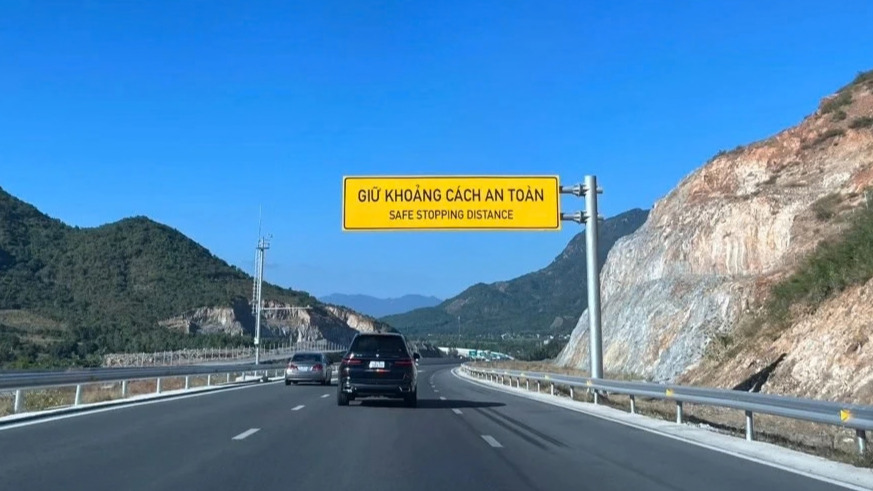
Starting August 27, 2026, the Traffic Police began taking action against violations of highway safety distance on the Phap Van – Cau Gie – Cao Bo – Mai Son – National Highway 45 – Nghi Son route.
Highway safety distance refers to the minimum distance between vehicles needed to give drivers enough time to respond if the vehicle ahead slows down or stops suddenly. This distance varies with vehicle speed and actual road conditions.
According to Circular No. 38/2024/TT-BGTVT, when the road is dry, weather conditions are normal, and visibility is clear, the minimum highway safety distance is determined by vehicle speed as follows:
|
Operating speed (V) |
Minimum Safety Distance |
|
V = 60 km/h |
35m |
|
60 < V ≤ 80 km/h |
55m |
| 80 < V ≤ 100 km/h |
70m |
|
100 < V ≤ 120 km/h |
100m |
In rain, fog, slippery roads, with limited visibility, drivers should proactively increase the safety distance beyond the minimum required.
Regulations on safe following distances on highway is not new. Since 2019, the minimum distance has been determined based on vehicle speed and traffic conditions. Current regulations continue to follow the same principle while providing more specific distance requirements. However, more frequent inspections in recent months have brought renewed attention to highway safety distance, particularly among drivers who regularly travel on highways.
According to information published by the Traffic Police Department, from August 27, 2026, drivers who fail to maintain a safe distance without causing a collision may face a fine of VND 4 – 6 million and 2 points deducted from their driving license. If the violation results in a traffic accident, the penalty may increase to VND 20 – 22 million and 10 points deducted from the driving license.
The recent increase in inspection and handling of violations highlights that maintaining a safe distance is not only a matter of regulatory compliance, but also an important factor to consider during vehicle operation.
Practical Challenges in Maintaining a Safe Following Distance
The law sets out specific safety distance requirements for different vehicle speeds. However, maintaining this distance in practice requires drivers to continuously observe the vehicle ahead, estimate the distance, and adjust their speed according to specific traffic situation.
The distance between vehicles can change rapidly as traffic density increases or when other vehicles change lanes or cut into the gap between cars. Conditions such as rain, fog, slippery road surfaces, or limited visibility also affect driver’s view and the time required to react to a situation.
At high speeds, the gap between vehicles can narrow significantly in a very short time. While distances like 55, 70, or 100 meters are easy to remember, precisely estimating them by eye while driving is far more difficult.
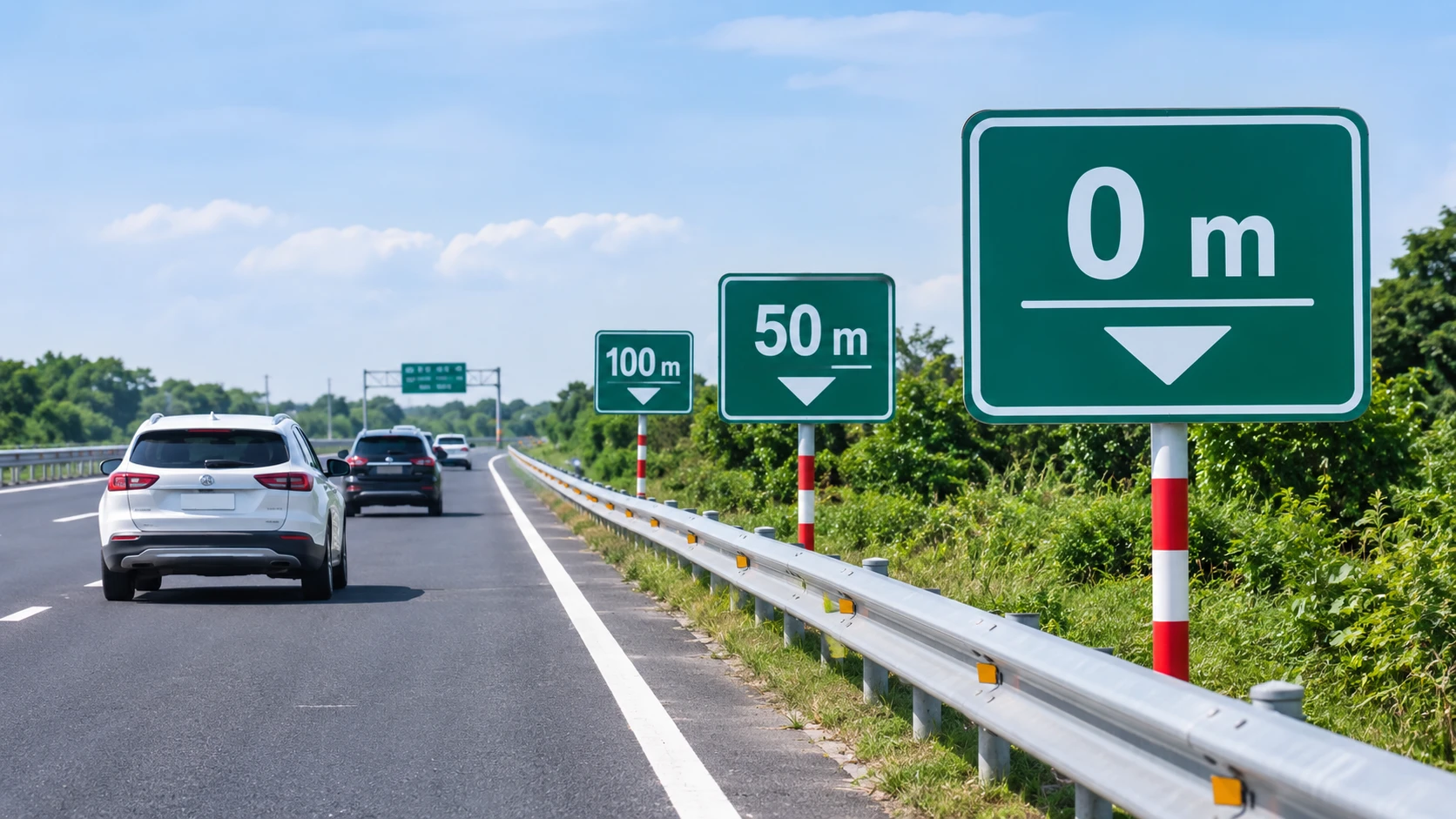
How does Technology support Drivers maintain a Safe Distance?
On many modern vehicles, driver-assistance systems have automated part of the process of detecting vehicles ahead. One of the most common technologies is Adaptive Cruise Control (ACC), which uses radar and/or cameras to detect vehicles ahead and adjust vehicle speed to maintain the distance set by the driver. When the vehicle ahead slows down, ACC can automatically reduce speed accordingly; when the gap opens up again, the system can accelerate back to the preset speed.
While ACC can automatically maintain a set following distance, it does not typically provide the driver with a specific distance measurement in meters.
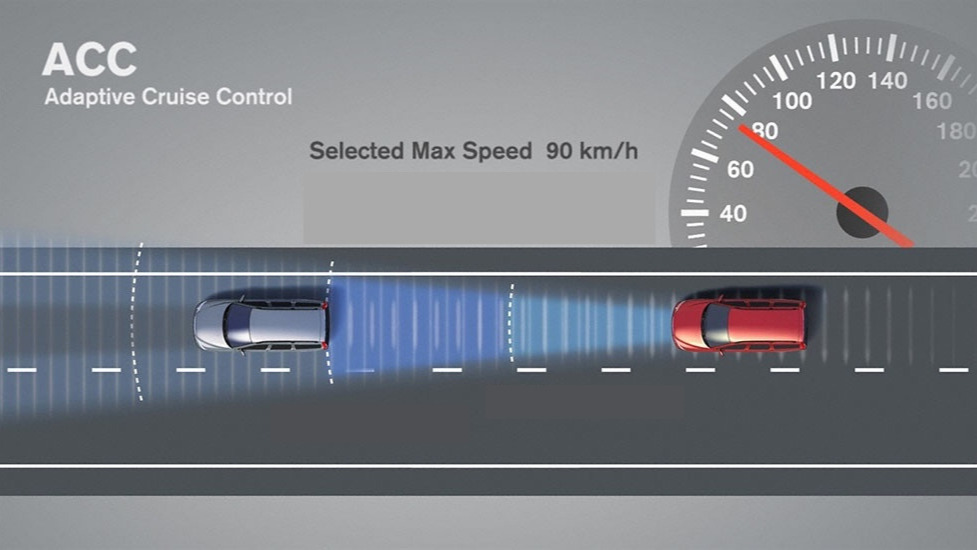
Meanwhile, another advanced driver-assistance technology, Forward Collision Warning (FCW), focuses on detecting potential collision risks and alerting the driver when the distance to the vehicle ahead falls below a safe level. Similar to ACC, FCW uses radar and/or cameras to detect vehicles ahead and assess potential risks. Unlike ACC, FCW does not directly adjust vehicle speed. Instead, it alerts the driver, who can then slow down or take appropriate action.
These technologies share a common approach: using data from radar, cameras, and onboard processing systems to provide drivers with additional information. However, the functions and level of intervention vary between systems and depend on the equipment available in each vehicle.
For fleets consisting of different vehicle models and generations, another approach is to use dedicated devices to collect data during vehicle operation. DriveSense by Vietsol combines distance-measuring hardware with a fleet management platform, providing additional data on the distance between vehicles during operation rather than relying solely on drivers’ visual estimates or the built-in technologies available in newer vehicle models.
DriveSense: Safe Distance Monitoring and Fleet Data Management
DriveSense combines camera, radar, and advanced algorithms to collect and process data throughout vehicle operation. These technologies work together to detect vehicles ahead, measure distance, and provide drivers with additional information to assess traffic situations.
AI–HD cameras and image-processing algorithms are key technology components of the system. Cameras positioned at different viewing angles continuously capture the surrounding environment within their respective fields of view. The algorithms process and analyze the captured images to detect and classify cars, trucks, and other vehicles ahead, giving the system additional visual context about objects in the vehicle’s path.
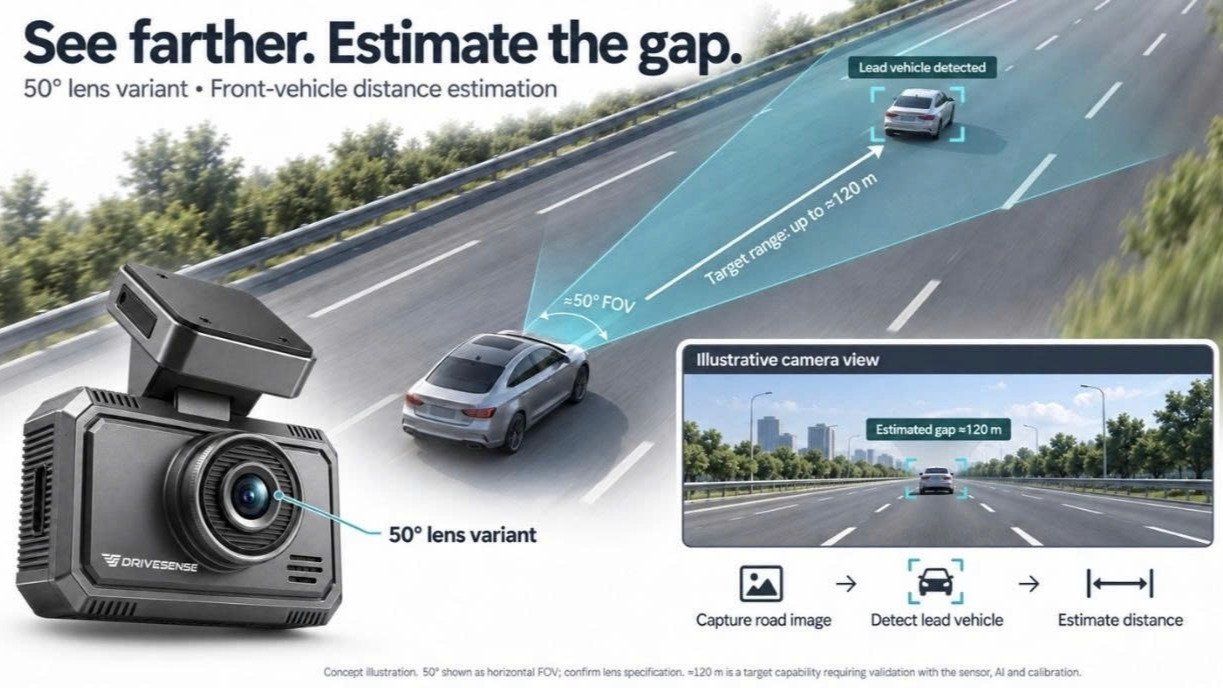
The camera system can also monitor the driver’s condition and behavior through in-cabin cameras and image-analysis algorithms. It can identify conditions and behaviors such as drowsiness, distraction, phone use, and smoking. Combined with data from road-facing cameras and radar, these inputs provide a more comprehensive view of the vehicle, the road environment ahead, and the driver’s condition during operation.
Besides, DriveSense utilizes 77 GHz millimeter-wave radar to gather data on the distance and relative motion of objects. Designed with a detection range of up to 150 meters, the radar helps identify vehicles ahead, as well as the distance and relative speed between the vehicle and detected objects.
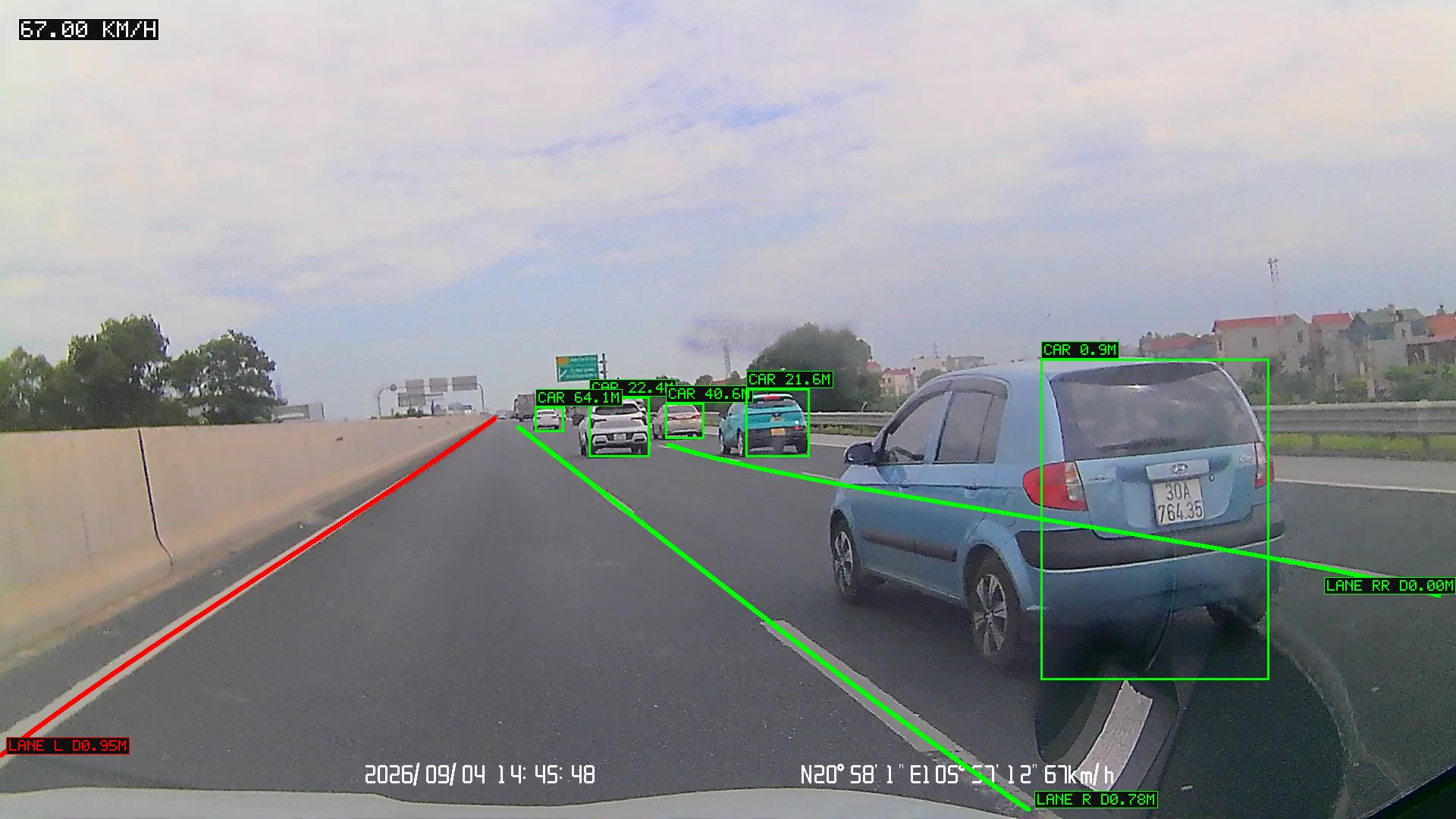
While cameras provide visual information about the characteristics and type of detected objects, radar provides quantitative data on distance and movement. Combining these two data sources gives the system more information to assess traffic situations rather than relying solely on camera images.
The data can be processed in real time while the vehicle is in operation to provide relevant information or alerts. Distance measurements can be displayed in the cabin, giving drivers additional information to assess the distance to vehicles ahead and adjust their driving accordingly.
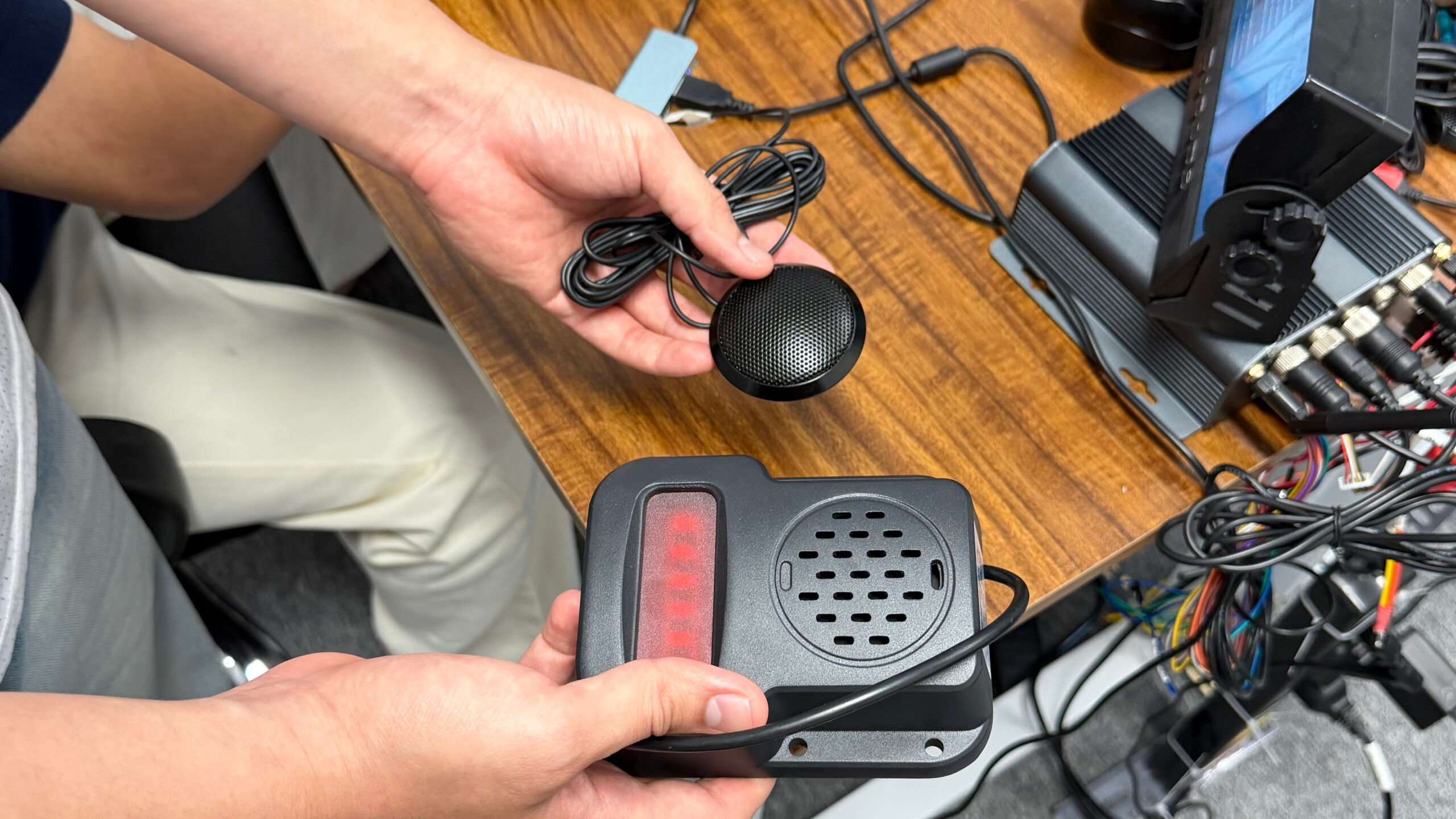
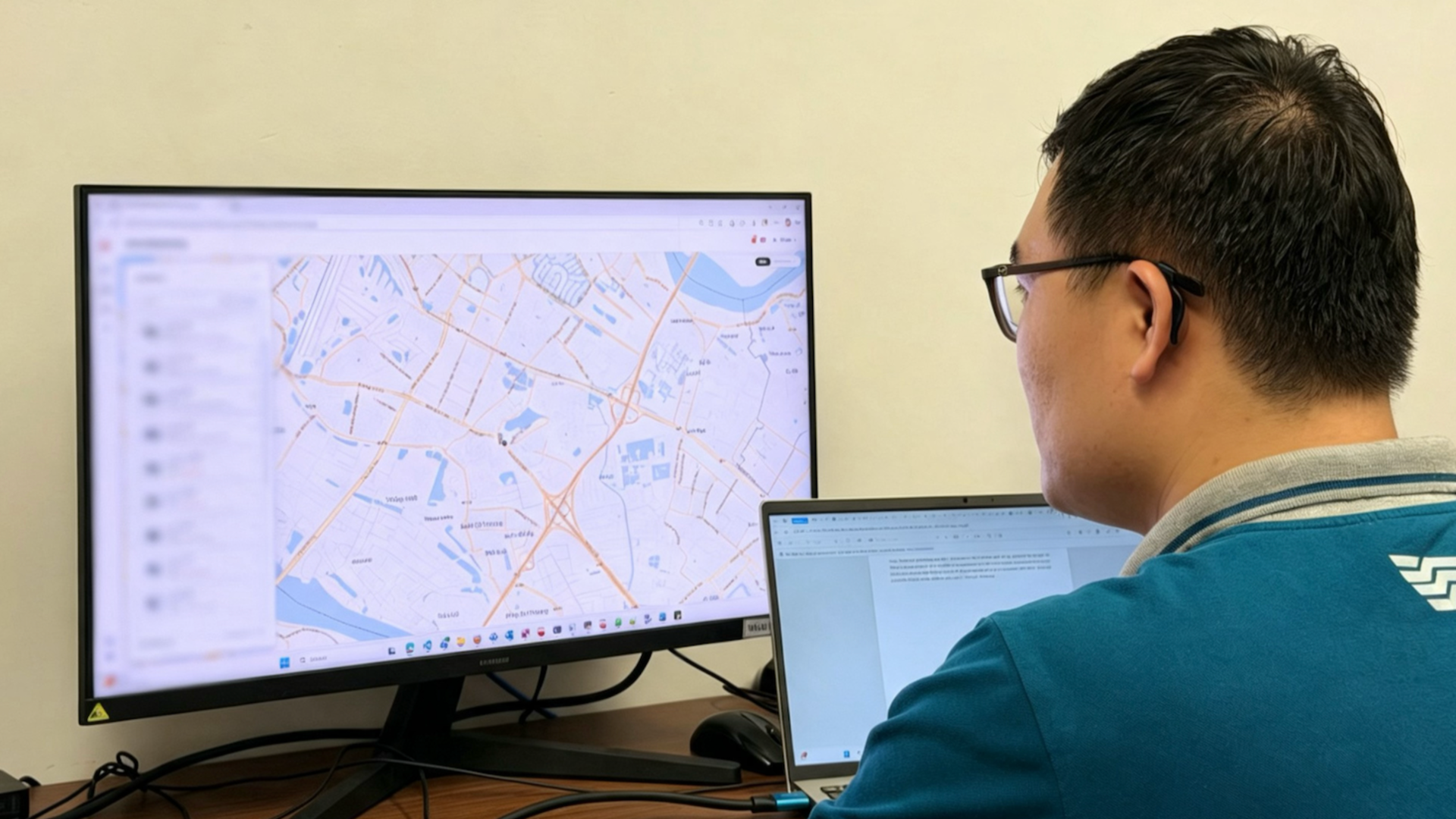
At the fleet management level, data collected during vehicle operation is also recorded and stored on the DriveSense platform for further review, analyzes, and assessment of safety-related situations. This additional layer of information enables businesses to monitor operations across multiple vehicles rather than relying solely on situations observed at a specific point in time.
Technology provides Support, but Drivers remain Responsible
Highway safety distance varies depending on vehicle speed, traffic conditions, weather, and different situations. Distance estimation methods, ACC, and distance-measuring devices can provide drivers with additional information to help them assess and respond to road situations. However, each technology and device has its own limitations and cannot fully replace human observation and judgment.
Systems equipped with cameras and radar still depend on sensor performances, detection capabilities, and the actual operating environment. Drivers therefore still need to remain focus and adjust their speed according to the conditions around them. Technology should be viewed as an additional layer of support that enhances awareness and response, rather than a complete replacement for the driver’s own observation and judgment.
As highway safety distance regulations receive increasing attention, the question is no longer just “How many meters should drivers maintain?” but also “How can drivers and businesses have enough information to maintain a safe distance in a practical and consistent way?”
For fleet operators, distance monitoring can also play a crucial role. Instead of existing only as a regulatory requirement, distance-related information can be captured during actual vehicle operation, providing businesses with additional data to monitor how safety distances are maintained in real-world driving conditions.
FAQ: Frequently asked questions about Highway Safety Distance
Can distance-measuring Radar help drivers comply with safety distance regulations?
Radar can provide data and movement of vehicles ahead, giving drivers additional information to support their decisions. However, sensor data does not mean that a vehicle will automatically comply with regulations in every situation. Drivers still need to consider factors such as vehicle speed, weather, road conditions, visibility, and surrounding traffic.
Can transportation companies manage highway safety distance across their entire fleet?
Fleet management systems and driver-assistance technologies can provide additional data on vehicles, drivers, and potential risk situations. For businesses, the value dose not rely only in monitoring an individual vehicle at a specific time point, but also in integrate data to identify trends, evaluate driving behavior, and proactively improve safety standards across the fleet.
What is the minimum highway safety distance?
The minimum highway safety distance depends on vehicle speed and is specified for different speed ranges under normal traffic conditions. On dry roads, in normal weather, and with adequate visibility, the minimum distance ranges from 35 m to 100 m, depending on the vehicle’s speed. In rain, fog, slippery road conditions, or limited visibility, drivers should increase the distance to allow sufficient time to respond to changing situations.
What is the 3-second rule?
The 3-second rule is a method for drivers to estimate distance based on time rather than measuring the distance directly in meters. The driver selects a fixed point on the road, starts counting when the vehicle ahead passes that point, and measures how long it takes for their own vehicle to reach the same point.
The corresponding distance varies with vehicle speed. At 60 km/h, a vehicle travels approximately 50 m in 3 seconds, while at 100 km/h, it travels approximately 83 m. Therefore, the 3-second rule does not represent a fixed distance in meters.
Does ACC help maintain a safe distance?
Yes. ACC uses sensors such as radar and/or cameras to detect vehicles ahead, determine their distance and relative speed, and automatically adjust the vehicle’s speed within the system’s operating range. However, ACC is a driver-assistance system and does not replace the driver’s responsibility to observe, assess situations, and control the vehicle.
How is FCW different from ACC?
Both FCW and ACC can use radar and/or cameras to detect vehicles ahead, but they serve different functions.
ACC can automatically adjust vehicle speed to maintain the distance set by the driver, while FCW only provides an alert when it detects a potential collision risk or when the distance to the vehicle ahead falls below a level that requires attention.
Does DriveSense replace ACC or other driver-assistance systems built into vehicles?
DriveSense does not replace ACC or other driver-assistance systems built into vehicles.
While ACC can automatically adjust vehicle speed to maintain a preset distance, DriveSense uses cameras, radar, and data-processing systems to collect information on vehicles ahead, distance, and relative speed, providing drivers with additional data and alerts to support their driving.
For transportation companies, this data can also be recorded on the fleet management platform to support the monitoring and evaluation of safety-related situations during vehicle operation.
RELATED NEWS
Safe Following Distance on Highway: Regulations and Practical Challenges
Safe following distance on highway is regulated based on vehicle speed, with minimum distances ranging from 35 m to 100 m. However, at high speeds, accurately estimating the distance between vehicles can be challenging. Starting August 27, 2026, the Traffic Police began taking action against violations of highway safety distance...
Vietsol and KPIT Sign MoU to Expand Automotive Engineering Delivery for OEMs Across Southeast Asia
Hanoi, Vietnam, August 20, 2026 – Vietsol and KPIT Technologies signed a Memorandum of Understanding (MOU) to collaborate on advanced mobility software and engineering services for OEMs and Tier-1 suppliers across Southeast Asia. Vietsol is a Vietnam-based engineering company specializing in automotive, mobility, and advanced manufacturing technology; KPIT Technologies is...
Vietsol and Datakrew Sign MoU to Advance EV Fleet and Battery Intelligence for Automotive OEMs
The collaboration combines Datakrew’s mobility intelligence technology with Vietsol’s automotive engineering expertise, system integration capability, and local execution strength to support an initial OEM opportunity in Vietnam, while also laying the groundwork for broader cooperation in EV and software-defined vehicle (SDV) development. Hanoi, Vietnam, July 2026 — Vietsol Joint Stock...