
 Tiếng Việt
 日本語
日本語
Automechanika returns to Southeast Asia in 2026 with two landmark editions, and Vietsol will be present at both.
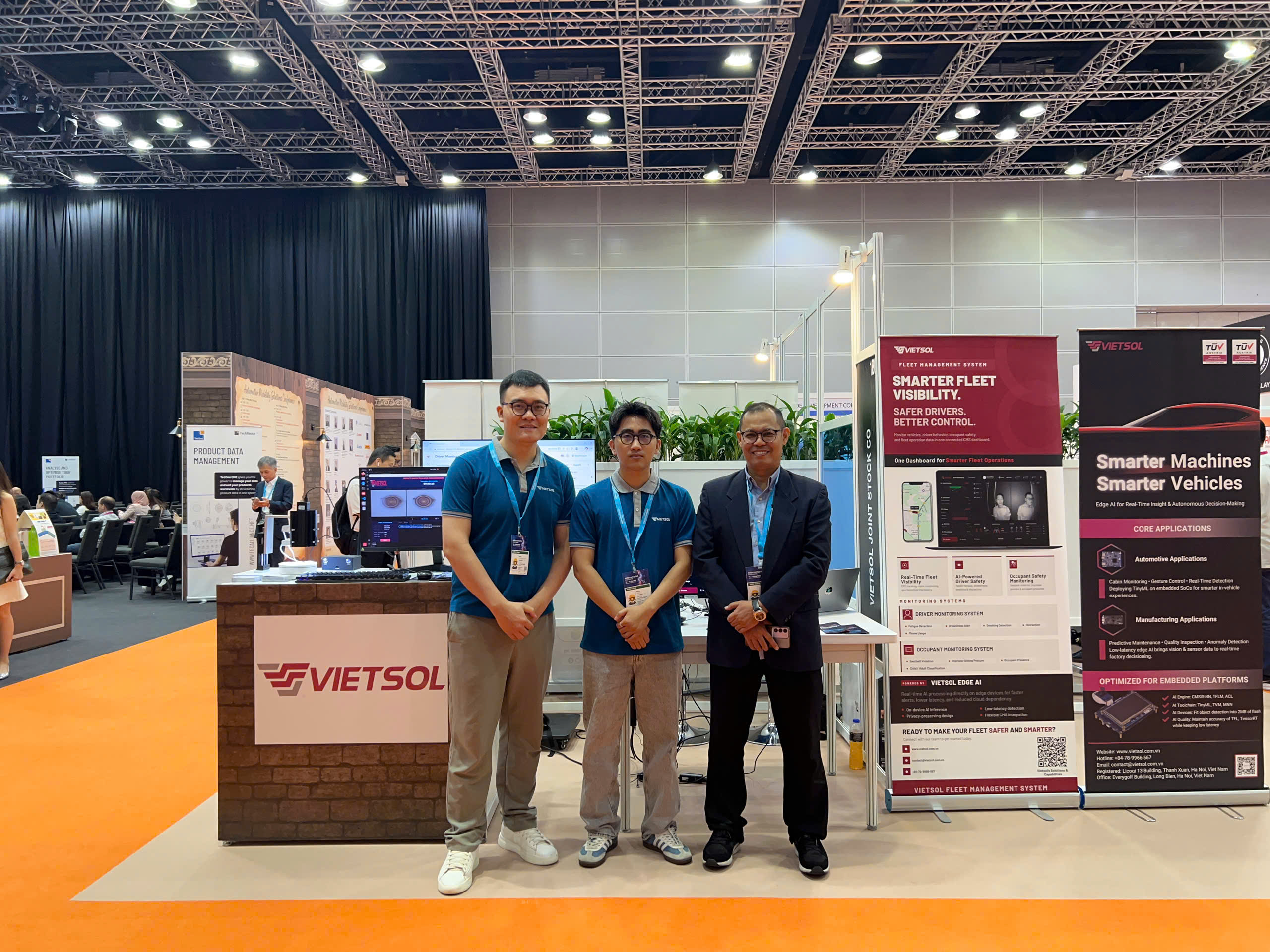
As a Strategic Partner of Messe Frankfurt, Vietsol participates as Speaker and Exhibitor at Automechanika Kuala Lumpur 2026 (14 – 16 May, Kuala Lumpur Convention Centre, Malaysia) and Automechanika Ho Chi Minh City 2026 (18 – 20 June, Saigon Exhibition and Convention Centre, Vietnam) – bringing together the full spectrum of ASEAN’s automotive industry across manufacturers, OEMs, aftermarket specialists, and technology innovators.
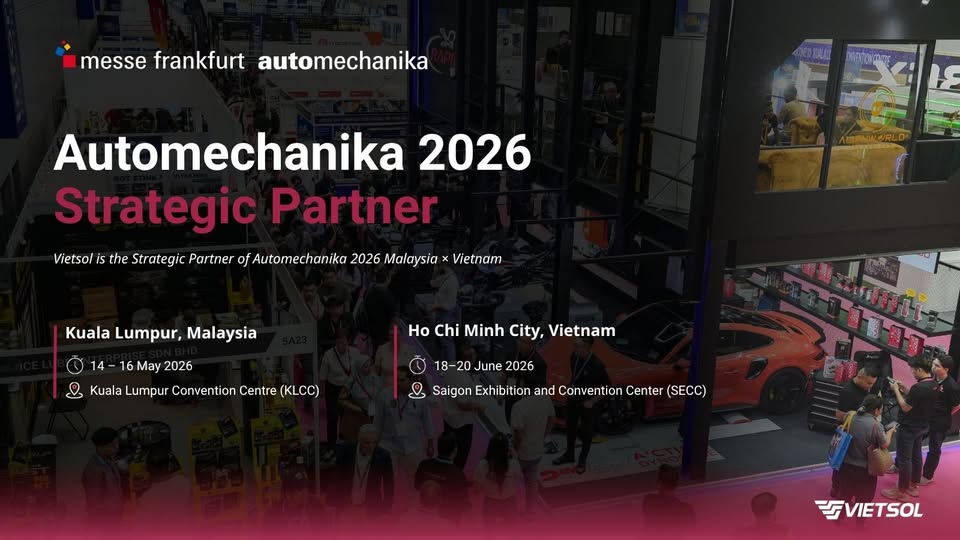
Together, these two events form a regional stage where the forces reshaping automotive across Southeast Asia converge: electrification, growing aftermarket complexity, and the accelerating adoption of AI and digital manufacturing tools. For Vietsol, this dual presence is more than continued participation – it is a direct commitment to engaging with the industry at the moments and markets that matter most.
What is ASEAN’s automotive industry navigating right now?
The conversations happening inside both Automechanika Kuala Lumpur and Automechanika Ho Chi Minh City 2026 are shaped by a set of real, structural pressures that manufacturers, dealers, and suppliers across Southeast Asia are managing at the same time.
The electrification shift is reshaping the regional ecosystem at every layer. Vietnam, ASEAN’s fastest-expanding EV market, saw total vehicle sales grow 18% year-on-year in 2025, while NEV sales surged 84%, with new energy vehicles now accounting for roughly one-third of all vehicles sold, one of the highest proportions in the bloc. (Source: Automechanika HCMC 2026 Press Release, citing Vietnam Investment Review, January 2026)
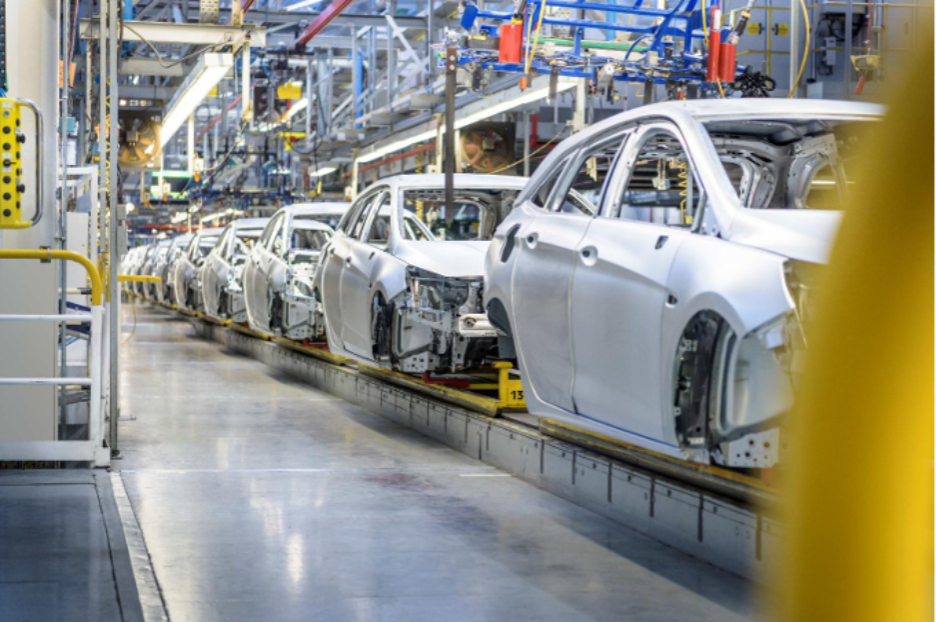
Malaysia, meanwhile, is navigating its own transition – balancing an established national OEM base with increasing pressure to integrate EV-compatible manufacturing and supply chain capabilities. Across both markets, the story is the same: electrification does not simply swap one vehicle type for another. It disrupts established supply chains, changes the aftermarket profile of entire fleets, and creates demand for new infrastructure, tooling, and technical skills that did not exist at scale five years ago.
The aftermarket implications are significant. The overall value of parts and accessories imported into Vietnam alone reached USD 2.89 billion, yet only around 20% of components are manufactured domestically – a localization gap that the EV transition will pressure further as battery diagnostics, software-driven service workflows, and EV-specific technician training become standard aftermarket requirements. Similar dynamics are playing out across the region.
On top of this, quality, throughput, and traceability requirements are tightening as production volumes scale and global supply chain partners raise their standards. AI-powered inspection, simulation-based training, and digital workflow tooling are moving from pilot projects to operational infrastructure. For most organizations in the region, the question is no longer whether to adopt – but how fast, and with what architecture.
What does advance manufacturing mean for ASEAN’s automotive sector?
The term “advanced manufacturing” is widely used – but in the context of ASEAN’s automotive sector in 2026, it carries a more specific and practical meaning.
According to Eurogroup Consulting, ASEAN is transitioning from a low-cost production base to a technology-enabled industrial ecosystem, driven by automation, AI, digital integration, and growing pressure to build sustainable supply chains. For the automotive industry, this means closing the gap between the pace at which vehicle programs are validated and the speed at which production needs to scale. It means deploying AI and automation in ways that fit the real operational conditions of factories across the region – not transplanting architectures built for entirely different cost and infrastructure environments. And it means doing all of this against a backdrop where market and regulatory pressure is intensifying, while talent and capital remain unevenly distributed.

These are engineering problems. They require engineering responses, not surface-level digitalization projects, but genuine capability changes that affect how vehicles are produced, distributed, and serviced.
This is the conversation both Automechanika Kuala Lumpur and Automechanika Ho Chi Minh City 2026 are built around. In Kuala Lumpur, the Automotive Mobility Solutions Conference (15–17 May, KLCC) brings this into focus across panel discussions addressing green mobility investment, advanced manufacturing transformation, smart energy solutions for EVs, and digital supply chain resilience, with speakers from organizations including Stellantis, Delta Electronics, Siemens Digital Industries Software, Bosch, and PwC. In Ho Chi Minh City (18–20 June, SECC), the dialogue continues with direct relevance to Vietnam’s own manufacturing and aftermarket trajectory as the region’s fastest-growing automotive market.
Vietsol’s participation, on the conference stage and the exhibition floor at both events, is grounded in this framing. The goal is not visibility for its own sake. It is to be part of the working dialogue that moves the region’s automotive manufacturing and aftermarket capability forward.
Where does Vietsol contribute to this conversation?
Vietsol’s role across both Automechanika editions is not peripheral. As a Strategic Partner of Messe Frankfurt, the team is involved at the level of industry dialogue, not just product exhibition.
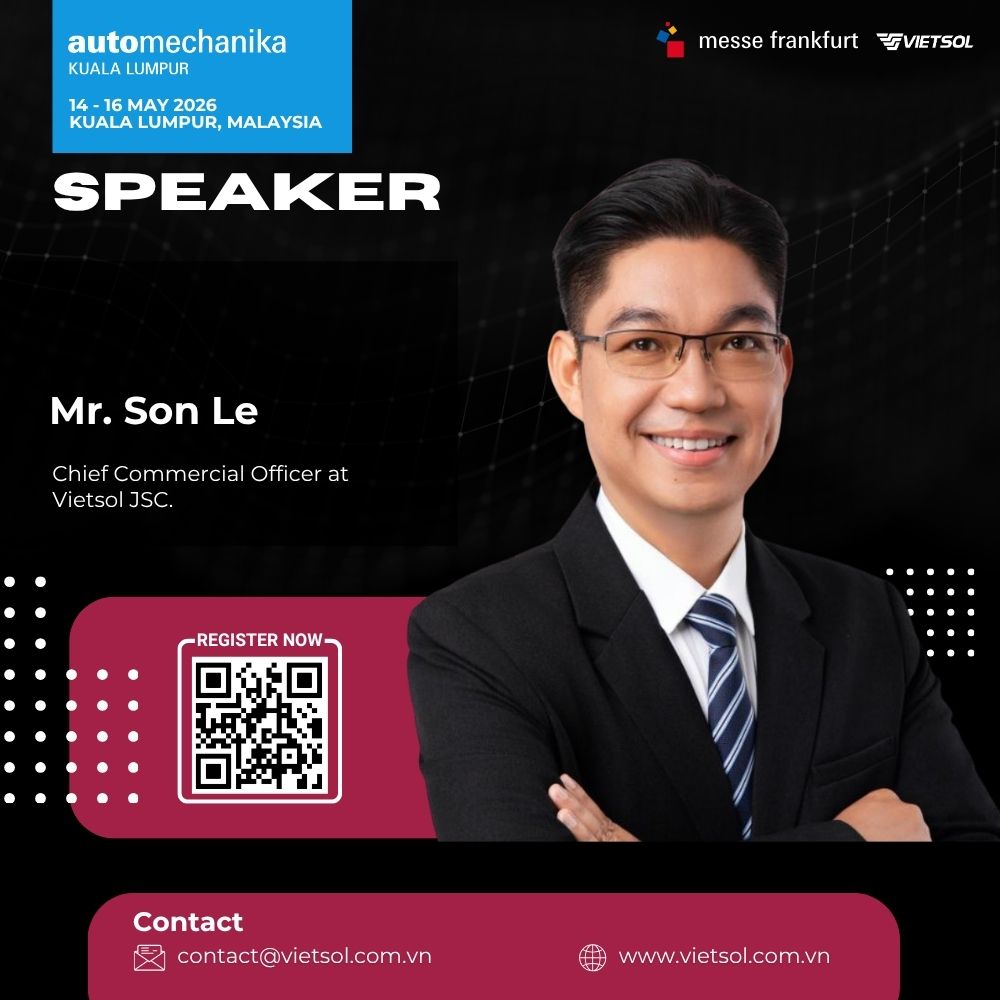
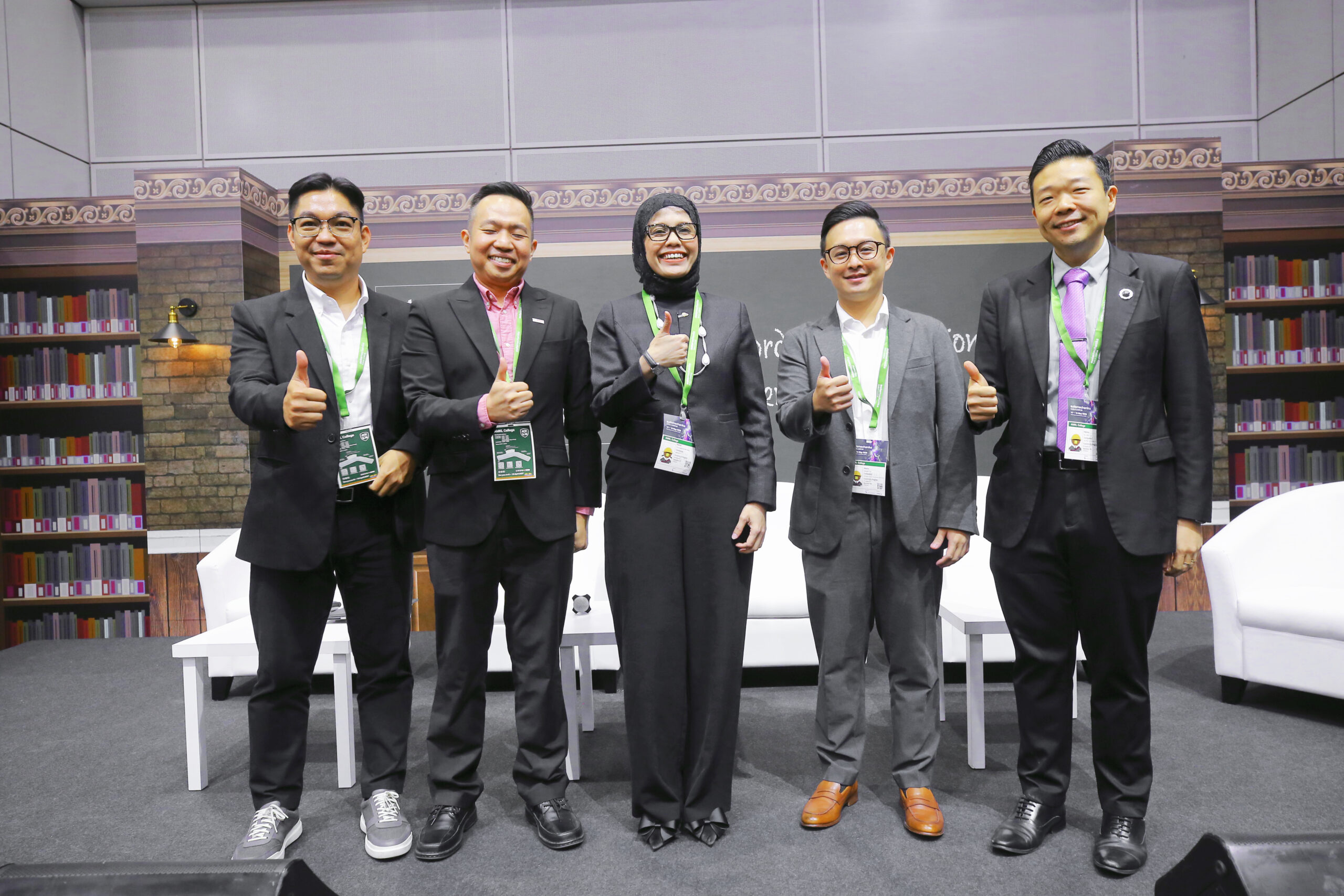
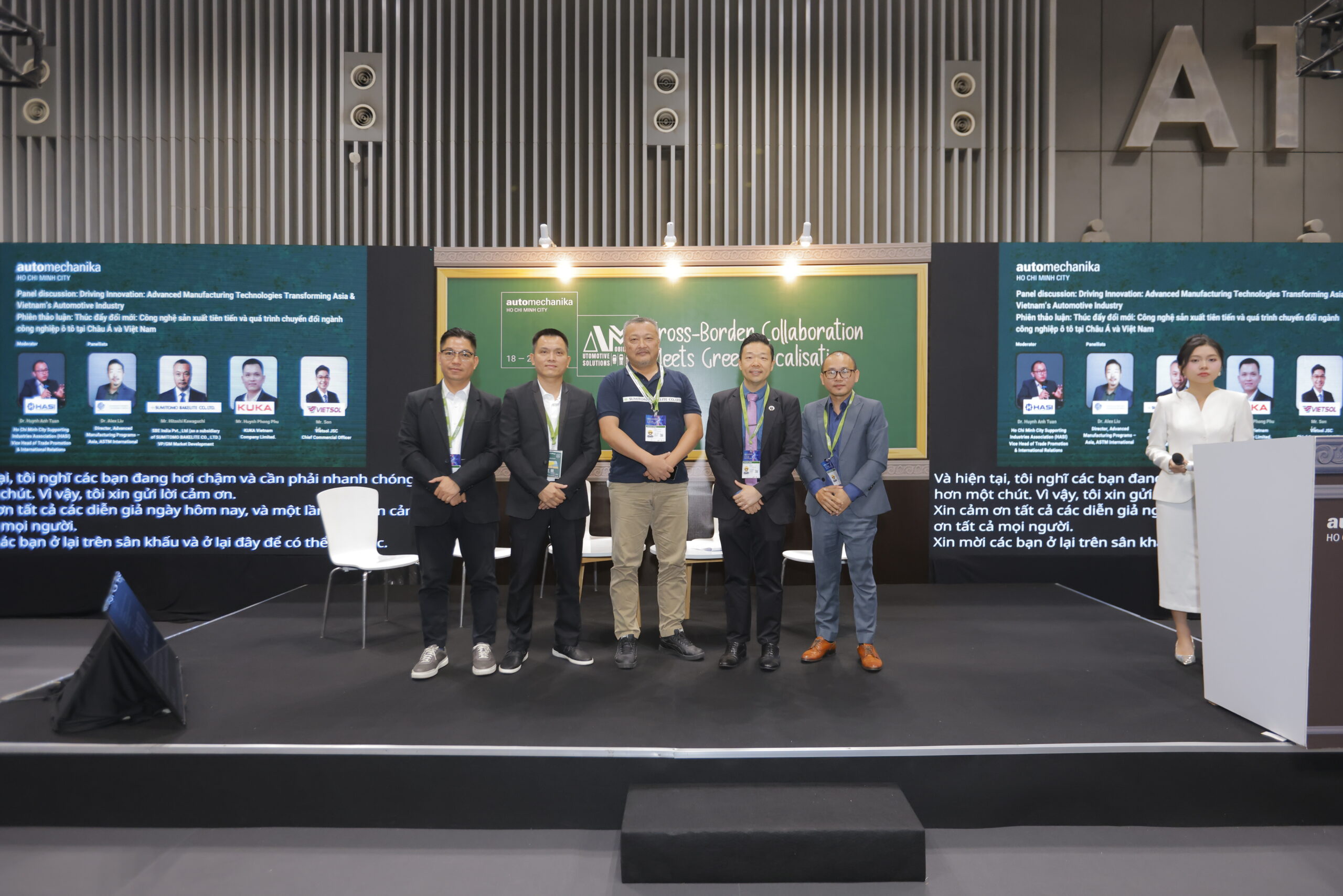
At Automechanika Kuala Lumpur, our Chief Commercial Officer, Mr. Son Le, joins the speaker lineup at the Automotive Mobility Solutions Conference, contributing to the panel on advanced manufacturing technologies transforming Asia’s automotive industry. This participation is a direct expression of the perspective Vietsol brings from working inside the regional automotive technology ecosystem: the manufacturing and operational challenges ASEAN automotive faces are technical problems that require genuine engineering responses, not just vendor messaging.
The panel Mr. Son Le joins addresses a real gap. Advanced manufacturing adoption in ASEAN’s automotive sector has historically lagged the pace seen in established markets like Germany, Japan, or the United States. The reasons are well-understood, capital constraints, talent gaps, fragmented supply chains, and a regulatory environment that has only recently begun to push harder on quality and traceability standards. What has changed is the market pressure. EV adoption is creating urgency. International OEM partners are raising their supply chain requirements. And the technology itself – edge AI, digital training tools, automated inspection – is now deployable at a cost and complexity level that makes it accessible to mid-sized automotive operations, not just Tier-1 multinationals.
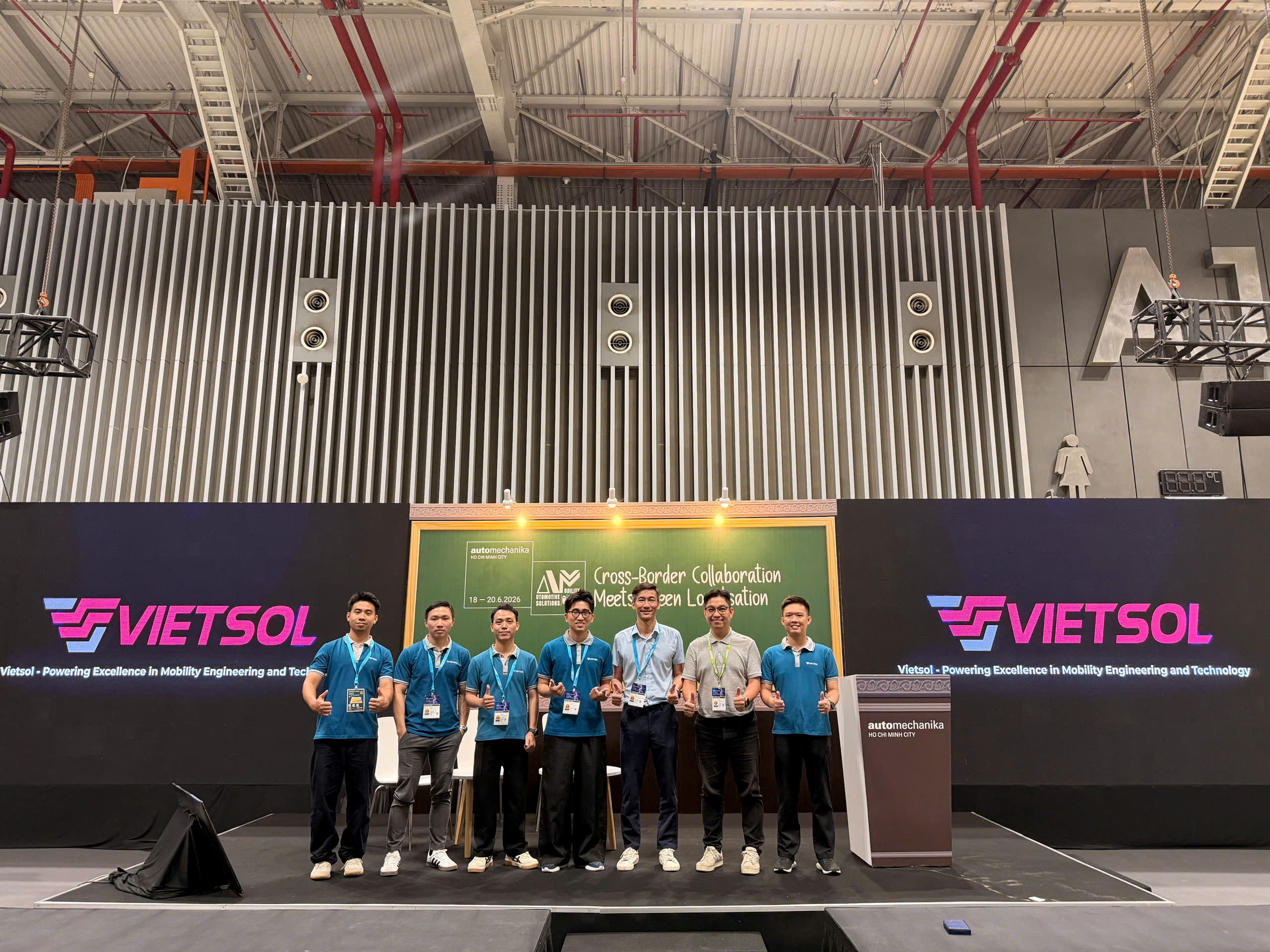
At Automechanika Ho Chi Minh City, Vietsol continues this engagement on the exhibition floor, bringing the same solutions and the same conversations directly to Vietnam’s automotive and aftermarket community at SECC in June.

This is the conversation Vietsol is built to contribute to, and both events are where that contribution takes shape.
What is Vietsol showcasing on the floor?
At Automechanika, Vietsol presents two solution areas built around a shared technical foundation: Edge AI processing that runs directly on device, without dependency on cloud connectivity. Both products operate where the automotive industry’s real operational constraints live – on the production floor and inside the vehicle cabin.
Driver and Occupant Monitoring Systems (DMS/OMS)
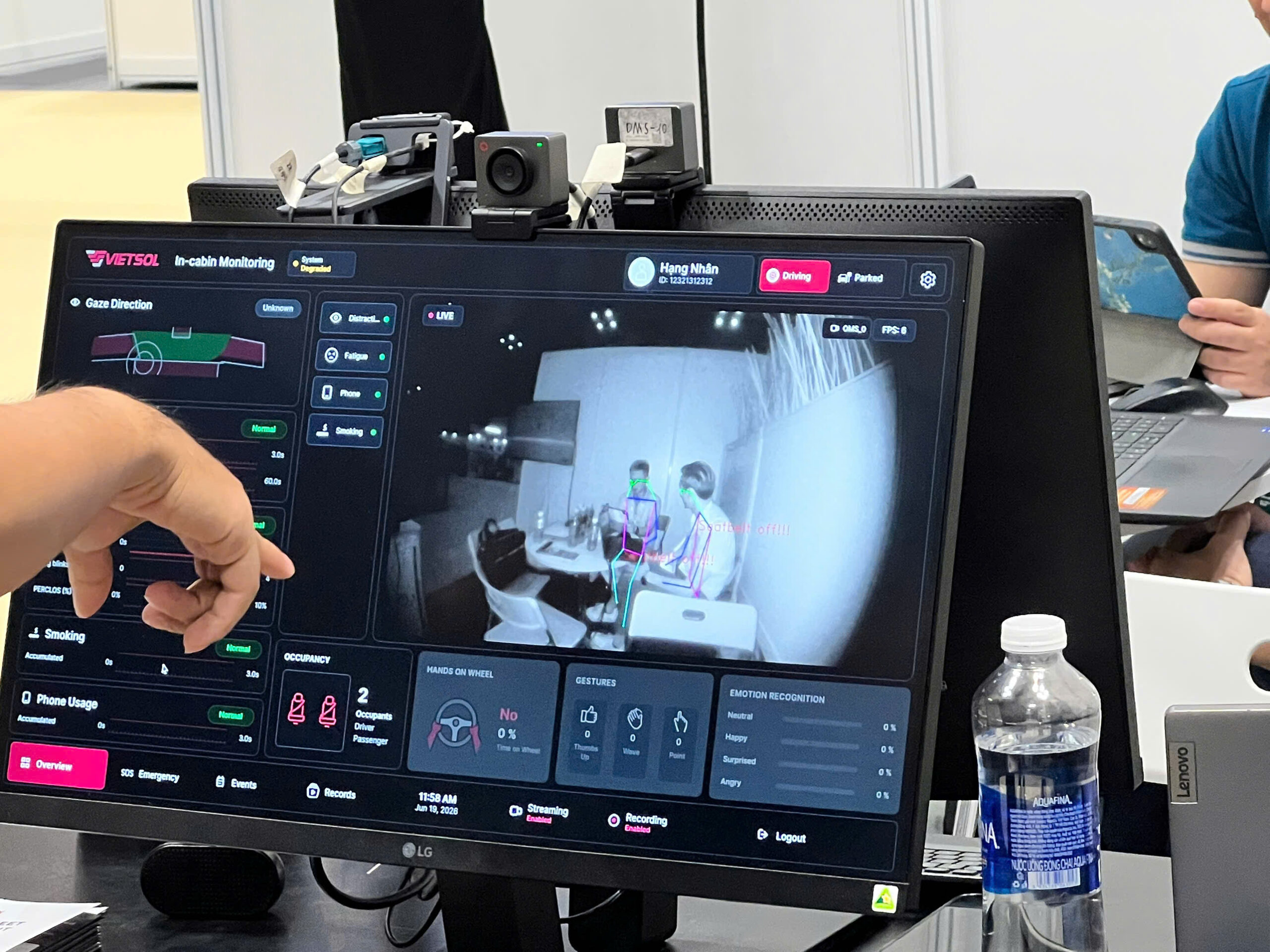
Many safety incidents originate from human factors inside the vehicle cabin – driver distraction, drowsiness, or occupants not wearing seat belts. The Driver Monitoring System (DMS) and Occupant Monitoring System (OMS) are Vietsol’s in-cabin monitoring solutions designed to detect these risks in real time and trigger immediate alerts before they become accidents.
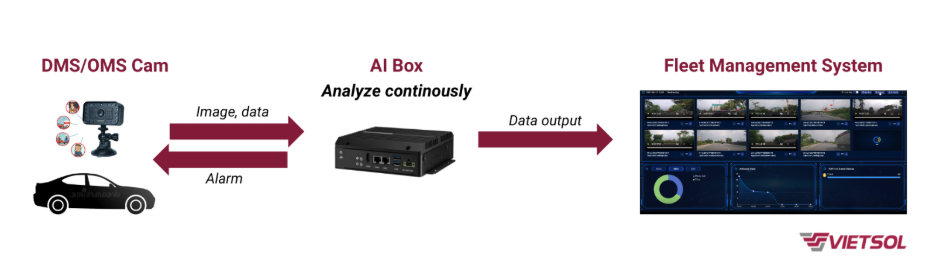
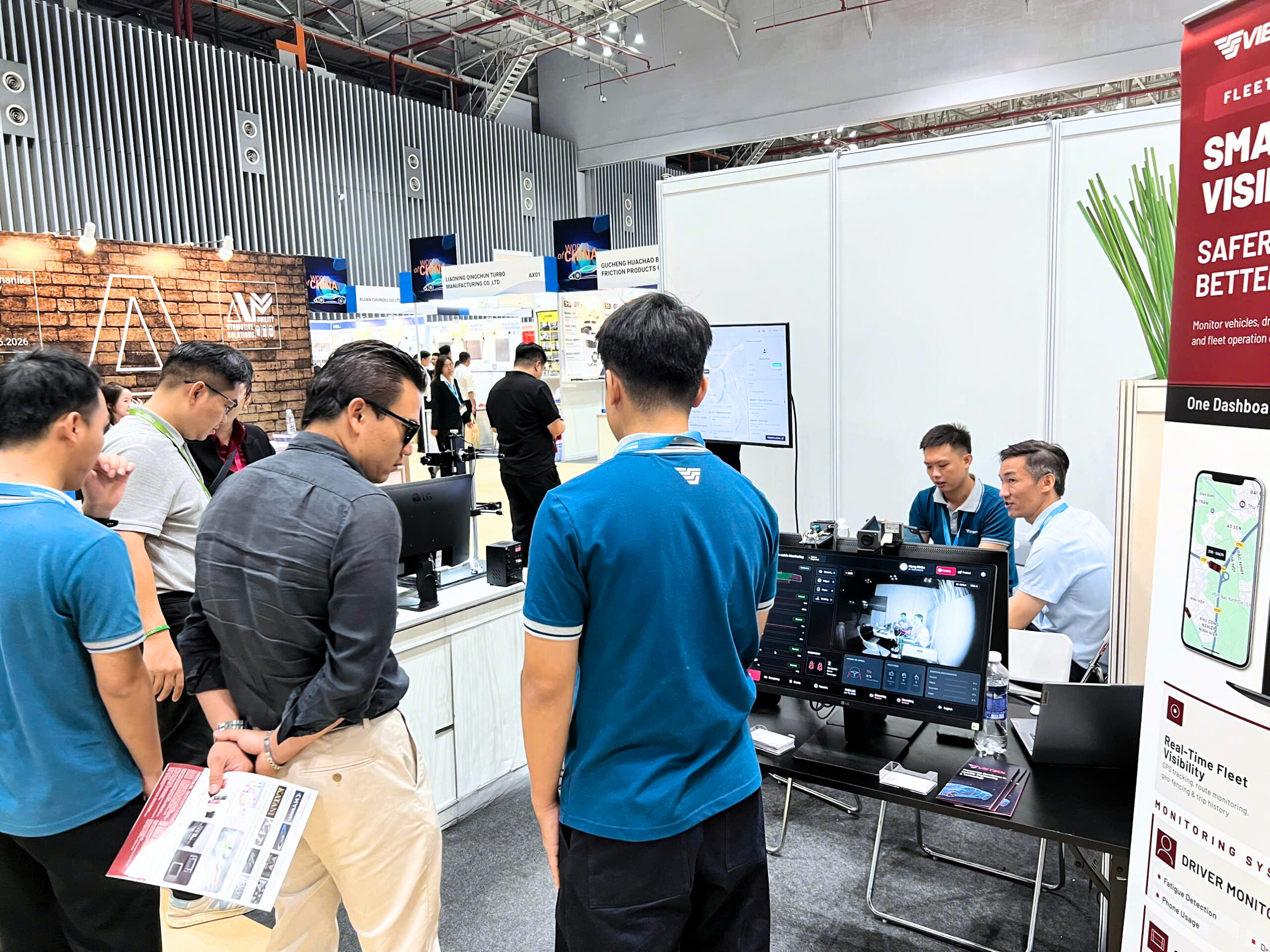
DMS uses a driver-facing camera combined with an Edge AI device to monitor a range of behavioral indicators: eyes off the road, extended blinking or yawning, phone use, smoking, and abnormal head pose. OMS extends this coverage to the entire cabin – detecting unfastened seat belts while the vehicle is moving, children or objects left behind, and abnormal passenger posture or immobility over time, which is especially relevant for public transport operators managing buses and school fleets.
The core architecture is what separates DMS/OMS from traditional camera-based monitoring. Camera data is processed directly by an AI box integrated inside the vehicle – analyzing driver and passenger status instantly, without transmitting anything to an external server. This eliminates latency, maintains continuous monitoring even in low-connectivity environments, and feeds a fleet management dashboard that gives transport operators real-time visibility across their entire vehicle network.
Regulatory pressure is reinforcing adoption across Vietsol’s key markets. In Europe, the General Safety Regulation (GSR) mandated driver monitoring systems across all new vehicles from 2024, while Euro NCAP will formally incorporate Driver State Monitoring and Occupant Monitoring into its core scoring criteria from 2026 – directly affecting vehicle star ratings. In Asia, China’s in-cabin monitoring installations grew 81.3% year-on-year between January and October 2023, with DMS now included in C-NCAP active safety assessment criteria carrying a score weight of 2 points from July 2024. All Vietsol DMS/OMS products comply with ISO 26262 (functional safety) and ISO/SAE 21434 (cybersecurity).
Edge AI Quality Inspection
On the manufacturing side, Vietsol deploys automated visual inspection systems that run entirely on-device – no cloud round-trip; no latency introduced by network dependency. The architecture uses multi-camera arrays processed by Jetson Orin NX chips, and the results in production environments are concrete: accuracy above 95%, zero missed-defect rate, and inference times of 15-40ms per cycle for metal component inspection. For garment manufacturing, the system detects color and pattern defects within 70ms; for shoe sole production, it verifies embossed information and measures curvature with 99.2% accuracy.
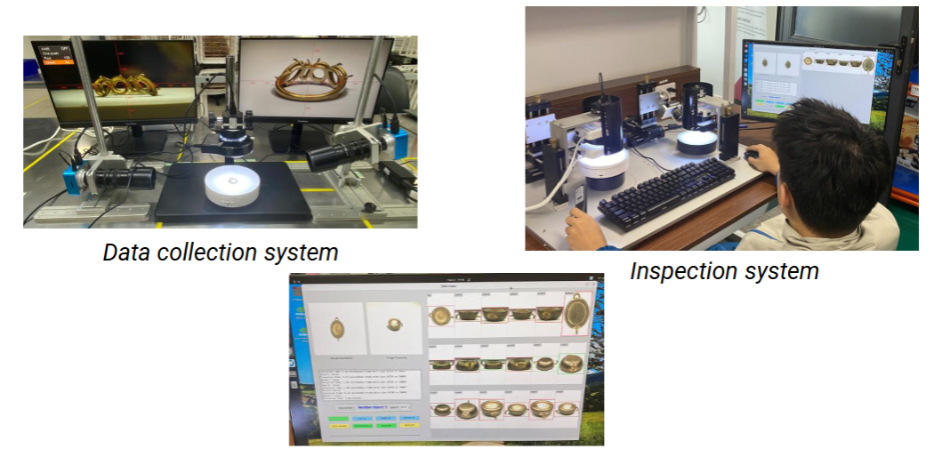
What distinguishes Vietsol’s approach from basic computer vision is the closed-loop response. Rather than flagging defects for a human operator to review, the system monitors, evaluates, and responds directly to the production line in real time – automatically adjusting assembly processes and work allocation without manual intervention. Detection, decision, and action happen within the same cycle.
For automotive manufacturers in the region scaling production capacity to meet growing demand, this addresses a real constraint: quality standards are rising at the same time as throughput requirements, and manual inspection cannot reliably keep pace with both. Edge AI quality inspection resolves that tension by embedding intelligence at the point of production, where the cost of a missed defect is highest.
Connect with Vietsol at Automechanika 2026
Automechanika Kuala Lumpur runs from 15 to 17 May 2026 at the Kuala Lumpur Convention Centre, followed by Automechanika Ho Chi Minh City from 18 to 20 June 2026 at the Saigon Exhibition and Convention Centre (SECC).
If you are attending either event and want to discuss automotive simulation platforms, edge AI quality inspection, or how Vietsol approaches advanced manufacturing challenges in the ASEAN context, our team will be present throughout – on the conference stage in Kuala Lumpur, and on the exhibition floor at both shows.
For the full conference agenda and speaker lineup at Automechanika Kuala Lumpur, visit: automechanika-kualalumpur.hk.messefrankfurt.com
For Automechanika Ho Chi Minh City, visit: automechanika-hcmc.hk.messefrankfurt.com
Gallery Images
RELATED NEWS
What is Fleet Management System? Components, Features, and Benefits
A Fleet Management System brings data from multiple sources together on a single platform, enabling businesses in the transportation and passenger transport sectors to monitor, analyze, and manage their fleet operations more effectively and comprehensively. Fleet management requires businesses to monitor vehicles, drivers, and a wide range of operational data...
Vietsol Wins Pizza Pitching, Advances to Top 20 of Next Wave of Startups 2026
Vietsol was named the sole winner of the Pizza Pitching session at the Ecosystem Meetup held in Ho Chi Minh City on September 19, securing a place in the Top 20 of the Next Wave of Startups 2026 Accelerator Program. The Ecosystem Meetup marked the opening of Next Wave of...
Safe Following Distance on Highway: Regulations and Practical Challenges
Safe following distance on highway is regulated based on vehicle speed, with minimum distances ranging from 35 m to 100 m. However, at high speeds, accurately estimating the distance between vehicles can be challenging. Starting August 27, 2026, the Traffic Police began taking action against violations of highway safety distance...